The Desperate Move
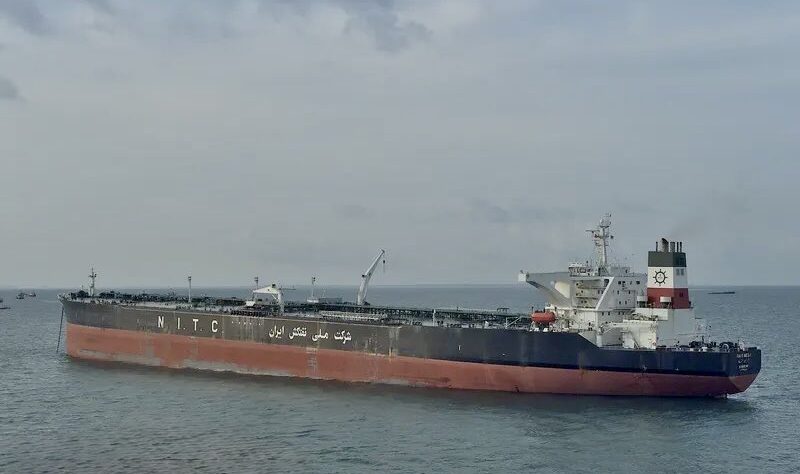
Iran has reactivated the NASHA (IMO 9079107), a 1996-built, two-million-barrel VLCC that sat empty and anchored off Kharg Island for years. She’s now being towed so slowly that a normal day-and-a-half trip is stretching into four days. TankerTrackers spotted it, with Gulf News, Iran International, and Fox News quickly following.
JUST IN: Iran just pulled a thirty-year-old empty supertanker out of retirement and began towing it toward Kharg Island. She is moving so slowly that a voyage that should take a day and a half is taking four days.
— Shanaka Anslem Perera ⚡ (@shanaka86) April 24, 2026
Her name is NASHA. IMO 9079107. Built 1996. A two-million-barrel… pic.twitter.com/Y2bRmcAwla
Why Now? Running Out of Storage
Kharg Island handles ~90% of Iran’s crude exports. When the US blockade hit on April 13, onshore tanks had about 13 million barrels of spare capacity. With exports collapsing but production continuing, net oil inflow is running at 1–1.1 million barrels per day. That spare capacity was projected to last roughly 12 days—a window that closes this week.
NASHA isn’t strategy. It’s what you do when strategy is gone. The two-million-barrel vessel buys Iran just 48 hours of continued production.
The Bigger Picture: No Easy Way Out
Parallel workarounds—ship-to-ship transfers in Indonesia, AIS-dark runs, and sanctioned tankers—are falling short. Lloyd’s List Intelligence has tracked only ~26 Iran-linked vessels evading the blockade since April 13. That volume can’t absorb a million barrels per day.
The Dangerous Cost of Shutting In Wells
If production must be curtailed, the geology is unforgiving. Iran’s giant southern fields (Asmari and Bangestan formations) are high-permeability, strong-water-drive carbonate reservoirs. Prolonged shut-ins trigger multiple permanent damage mechanisms:
- Water coning through fractures
- Fines migration
- Formation compaction
- Clay swelling
Experts estimate 300,000–500,000 barrels per day of permanent capacity loss. The reservoir doesn’t negotiate.
What NASHA Really Reveals
When a nation with the world’s third-largest oil reserves pulls a 30-year-old “corpse” tanker out of retirement to float at its main terminal, its shock-absorption systems have failed. Insurance, shadow fleets, diplomacy, and basic physics are all hitting limits.
The market may be pricing a ceasefire. The Pentagon may be pricing months of mine clearance. But NASHA is the visible proof on satellite imagery: Iran has run out of options between blockade and shut-in.
This is not how reversible crises look. This is operational desperation.